By Nhlanhla Nene – Well-being Coach & Founder of Mindedjoy
TL;DR: Why High Achievers Feel Drained by Their Own Commitments.
High achievers can become drained not simply because they have too much to do, but because they continue carrying commitments that no longer reflect their current values, priorities, or identity. Being dependable, useful, available, and capable can become part of how a high achiever sees themselves. As a result, saying yes may feel easier than disappointing someone, even when another commitment adds stress or resentment. The problem is not necessarily that a commitment is bad. Some commitments are simply outdated. They may have made sense at an earlier stage of life but no longer fit who you are becoming. A useful starting point is to examine your commitments through three questions: Would I choose this commitment again today? Am I doing it from willingness or obligation? Does it still reflect what matters to me? The goal is not to eliminate every demanding responsibility. It is to create greater alignment between what you commit to and where you genuinely want to invest your time, attention, and energy.
The hidden cost of always being the reliable one
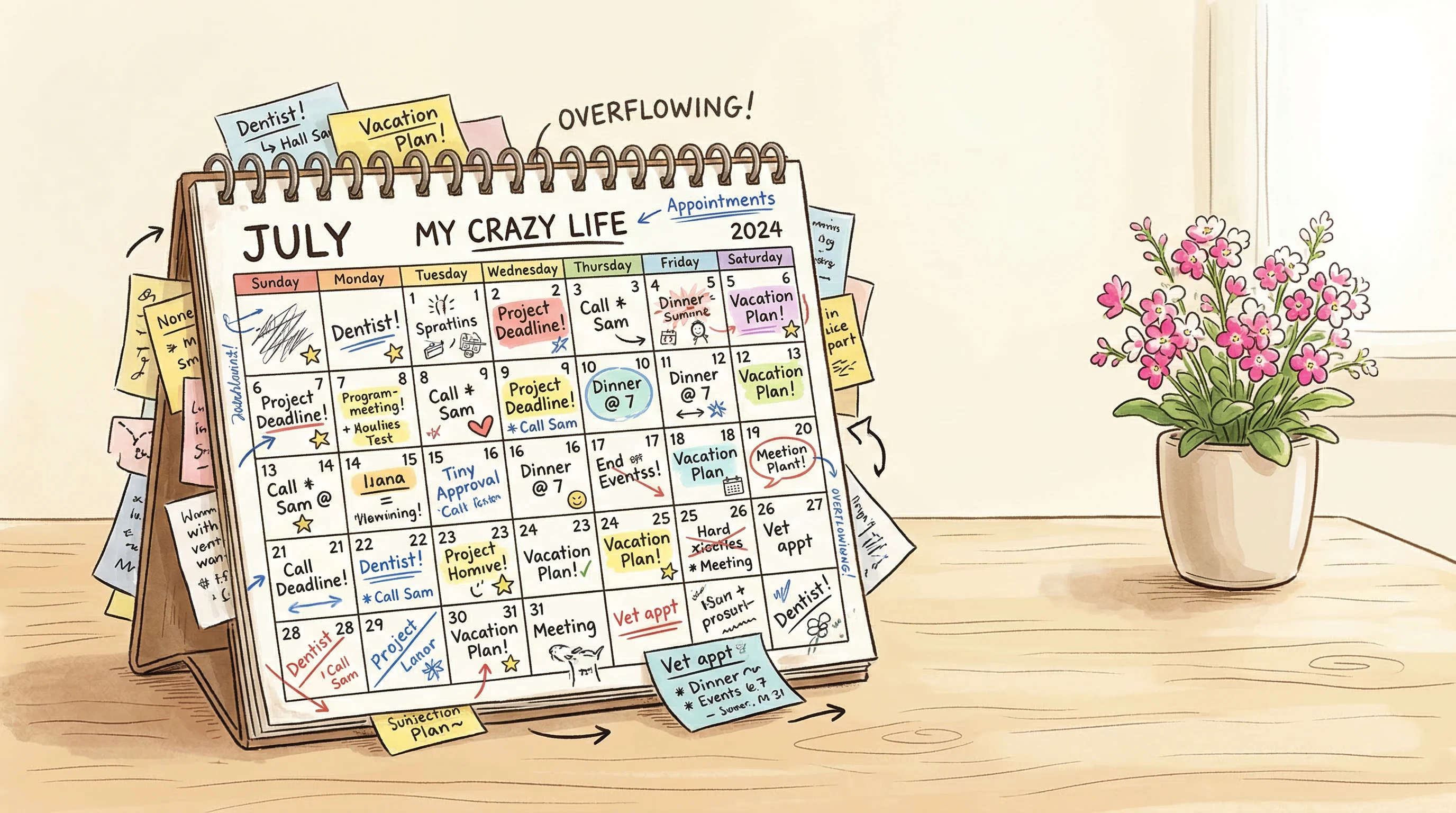
Your calendar is full.
Your responsibilities matter.
People trust you. They depend on you. They respect you.
And yet, something feels quietly heavy.
Not necessarily because you are doing the wrong things.
Sometimes, the deeper problem is that too many of the things you keep doing no longer feel like you.
This is a hidden tension many high achievers carry.
You may have built a life around being dependable, capable, responsive, and useful, but not necessarily around being aligned with who you are now.
And over time, that gap can become exhausting.
You may not need better time management.
You may need to examine what you are continuing to carry, and why.
Because some commitments consume more than your time.
They consume your attention, emotional availability, presence, and energy.
And some remain in your life not because you consciously choose them, but because they have become part of your identity.
Why High Achievers Over-Commit
The usual advice is simple:
Set better boundaries.
Learn to say no.
Stop taking on so much.
Those suggestions can help, but they don’t always address the deeper issue.
For some high achievers, saying yes is not merely a scheduling decision.
It is connected to who they believe they are.
You may recognize thoughts such as:
“I’m the reliable one.”
“People know they can count on me.”
“I don’t want to let anyone down.”
“If I stop being useful, will people still value me?”
“I should be able to handle this.”
When usefulness, dependability, or achievement become closely connected to identity, reducing commitments can feel surprisingly uncomfortable.
You aren’t simply declining a task.
You may feel as though you are stepping away from a version of yourself that has earned approval, respect, or belonging.
That is why “just say no” can be much harder than it sounds.
The Subtle Signs Your Commitments Are Draining You
Over-commitment doesn’t always look like obvious burnout.
For a high achiever, it can look remarkably successful from the outside.
You continue performing.
You meet deadlines.
You help people.
You remain dependable.
But internally, something begins to change.
You might notice:
You perform well but feel emotionally disconnected while doing it.
Your productivity remains high, but your enjoyment keeps declining.
You repeatedly tell yourself, “I’m just tired.”
You feel obligated more often than willing.
You keep commitments because they fit your identity rather than because you consciously choose them.
You have difficulty being fully present because your mind is always anticipating the next responsibility.
You feel resentment about obligations you once accepted willingly.
You rarely ask whether the life you are maintaining still reflects what matters to you.
The difficult part is that nothing may appear obviously wrong.
Your life can still look successful.
Your calendar can still look impressive.
Your responsibilities can still be important.
Chronic stress is not simply a feeling of being busy. The American Psychological Association notes that prolonged stress can affect both psychological and physical well-being, including energy, concentration, mood, and sleep. One practical recommendation is to identify sources of stress, review your commitments and priorities, and reduce what is not essential.
But success on the outside does not automatically mean that everything you are maintaining remains aligned on the inside.
Not Every Commitment Is Wrong. Some Are Outdated.
This may be the most important distinction in this entire conversation.
Not every commitment that drains you is a bad commitment.
Some were right for you once.
They may have helped you grow.
They may have reflected your values at an earlier stage.
They may have been meaningful when you first accepted them.
Sometimes discovering which commitments still fit requires reconnecting with your inner life, the values, interests, needs, and desires that can become difficult to hear when achievement and responsibility dominate your attention.
But people change.
Your priorities change.
Your capacity changes.
Your relationships change.
Your understanding of yourself changes.
And sometimes, a commitment that once expressed who you were becomes something you maintain simply because you have always maintained it.
This creates a subtle form of identity friction:
The commitment belongs to an earlier version of you, but your present self is still paying the cost of carrying it.
Growth therefore requires more than adding new goals.
Sometimes growth means updating what you are willing to continue carrying.
A Better Question Than “How Can I Fit It All In?”
High achievers are often remarkably good at making things fit.
They reorganize the calendar.
They optimize routines.
They wake earlier.
They work faster.
They squeeze another responsibility into an already crowded week.
But there comes a point when optimization becomes a way of avoiding a more important question:
Do I actually want to keep doing this?
If you find that your commitments no longer have a clear connection to what matters most, it may help to clarify what your commitments are actually serving, your values, your relationships, your purpose, or a direction you consciously want to pursue.
Try asking yourself:
1. Would I choose this commitment again today?
Not:
“Did I agree to it?”
Not:
“Would someone be disappointed if I stopped?”
But:
“Knowing what I know today, would I consciously choose this again?”
2. Am I doing this from willingness or obligation?
There is an important difference between responsibility and internal compulsion.
A commitment can be difficult and still meaningful.
But if obligation has completely replaced willingness, it deserves examination.
3. Who am I trying to be by saying yes?
Are you trying to remain:
dependable?
indispensable?
successful?
generous?
needed?
admired?
conflict-free?
The answer may reveal that the commitment is serving an identity as much as it is serving a practical purpose.
4. What would feel true if I stopped performing?
This question can be uncomfortable.
It can also be revealing.
Because sometimes what drains us isn’t the responsibility itself.
It is the effort required to continually perform the version of ourselves that comes with it.
The One-Week Commitment Audit
Instead of immediately eliminating everything that feels draining, spend one week observing.
For each significant commitment, notice three things:
Energy
How do you feel before, during, and after it?
Meaning
Does this commitment still connect with something you genuinely value?
Choice
Would you choose it again if nobody expected you to continue?
You are not trying to label everything as “good” or “bad.”
You are looking for patterns.
Pay attention to where you experience:
resistance
tightness
resentment
dread
emotional flatness
Also notice where you experience:
ease
meaning
engagement
curiosity
connection
The purpose is not to treat every uncomfortable feeling as proof that you should quit.
It is to become more honest about the relationship you have with the commitments you carry.
Why Letting Go Feels So Difficult
Here is where the problem becomes deeper than time management.
Identity.
When you step away from a commitment, you may also feel as though you are stepping away from:
being the dependable one
being needed
being the person who always helps
being seen as capable
being available
being admired
being “the one people can count on”
That can create guilt.
And guilt can be surprisingly persuasive.
It can tell you:
“You should keep doing this.”
“People will think you’ve changed.”
“You’re letting someone down.”
“You are becoming selfish.”
But guilt is not always proof that a decision is wrong.
Sometimes guilt appears because you are changing a familiar pattern.
If you have spent years equating availability with value, becoming less available may initially feel uncomfortable, even when the change is healthy for you.
The goal is not to eliminate every uncomfortable feeling.
It is to learn how to distinguish guilt from genuine responsibility.
Reclaiming Your Energy Isn’t the Same as Doing Less
This is another important distinction.
The goal isn’t to create an empty calendar.
Nor is it to abandon every difficult responsibility.
The goal is to create greater congruence between what you give your energy to and what you actually value.
When you release or renegotiate commitments that no longer fit, something more important than free time can emerge.
You may experience:
greater emotional availability
more genuine relationships
greater presence
less internal resistance
more space for meaningful priorities
a stronger sense of personal choice
You aren’t simply becoming less busy.
You are becoming more intentional about what deserves your life energy.
You Don’t Have to Overhaul Your Life
One danger for high achievers is turning this process into another optimization project.
You discover that your commitments are draining you, and immediately decide to redesign your entire life.
You don’t have to.
Start with one commitment.
Reducing the load does not have to mean redesigning your entire life overnight. The CDC recommends practical, sustainable approaches to managing stress, including identifying stressors, making space for restorative activities, maintaining social connection, and taking care of sleep and physical health.
Ask:
What can I stop, reduce, delegate, renegotiate, postpone, or redefine?
Sometimes the answer isn’t to leave.
It might be to change the frequency.
Change the role.
Reduce the responsibility.
Set a clearer boundary.
Ask someone else to share the load.
Or establish an end date.
The objective isn’t maximum freedom.
It is greater alignment.
A Simple Reframe for Saying No
Instead of thinking:
“I’m saying no to this person.”
Try:
“I’m making a more conscious decision about what I can genuinely give.”
Instead of:
“I’m letting people down.”
Try:
“I’m being honest about what I can sustainably carry.”
Instead of:
“I’m no longer the reliable one.”
Try:
“Reliability doesn’t require unlimited availability.”
And instead of:
“I should be able to handle everything.”
Ask:
“Does handling everything require me to abandon something important within myself?”
That question changes the conversation.
What You Gain When You Let Go
Letting go of a misaligned commitment isn’t simply subtraction.
It creates room.
Room to think.
Room to feel.
Room to be present.
Room to choose.
When you release commitments that no longer fit, you may begin to notice something that has been missing beneath the busyness:
your own participation in your life.
You stop merely performing your responsibilities and begin inhabiting your choices again.
Your energy becomes more intentional, not merely greater.
Your relationships can become more genuine because you are participating willingly rather than automatically.
And perhaps most importantly:
you start choosing your life again, consciously.
Frequently Asked Questions
1. Why do high achievers feel drained by their commitments?
High achievers can become drained when they maintain too many responsibilities, particularly when commitments are driven by obligation, identity, usefulness, or fear of disappointing others rather than conscious choice.
2. Why do high achievers over-commit?
Over-commitment can become connected to identities such as being dependable, capable, useful, or needed. This can make saying yes feel emotionally easier than declining a request, even when capacity is already limited.
3. How do I know if I’ve outgrown a commitment?
Ask whether you would consciously choose the commitment again today, whether it still reflects your values, and whether you are participating willingly or mainly from obligation.
4. Why does saying no make me feel guilty?
Saying no can challenge established expectations and identities. If being available or dependable has become part of how you see yourself, changing that pattern can initially produce guilt or discomfort.
5. How can I reduce commitments without abandoning my responsibilities?
You do not necessarily need to quit a commitment. You may be able to reduce its frequency, renegotiate your role, delegate part of it, establish clearer boundaries, or create an end date.
A Final Reflection
You don’t need to abandon ambition.
You don’t need to become less caring.
You don’t need to stop being dependable.
And you don’t need to say no to everything.
But you may need to question the commitments you continue carrying simply because they once helped define who you were.
Ask yourself:
What am I currently maintaining that no longer feels like me?
Which commitments still reflect my values, and which ones reflect an older version of me?
Where am I choosing obligation over willingness?
What would I make room for if I stopped trying to be needed everywhere?
The goal isn’t to have fewer commitments for the sake of having fewer commitments.
It is to have commitments that you can carry without continually abandoning yourself in the process.
Because sustainable success isn’t just about how much you can handle.
It is also about whether the life you are capable of handling is a life you actually want to keep living.
Author Bio
Written by Nhlanhla Nene. Nhlanhla is a Well-being Coach, Mindvalley Certified Life Coach, and founder of Mindedjoy. With advanced training in narrative, personal, and corporate coaching—combined with a background as a Certified Global Management Accountant (ACMA CGMA)—he blends psychology-based coaching with real-world leadership insight. He helps high-performing professionals bridge the achievement–fulfillment gap and build sustainable well-being grounded in resilience, joy, and meaningful connection.