
A deeper guide for high achievers learning how to stay connected when intensity rises
Written By Nhlanhla Nene – Well-being Coach & Founder Of Mindedjoy
The Quiet Struggle No One Sees
Your life works.
You’re competent. Responsible. Reliable.
You meet expectations. You solve problems. You deliver.
For many high-functioning professionals, difficult emotions don’t show up as chaos. They show up as quiet tension, irritability, emotional numbness, overthinking, or the sense that you’re coping but not truly grounded.
TL;DR: Managing Difficult Emotions…in 20 seconds.
High achievers often manage life well but struggle privately with anxiety, irritability, or emotional numbness. Difficult emotions aren’t weaknesses — they’re signals pointing to unmet needs, crossed boundaries, or internal pressure. Suppressing them may protect performance short-term but builds long-term strain. Instead of fixing or avoiding feelings, name them, allow them, and regulate your body first. Look for patterns rather than problems. Emotional resilience isn’t about control — it’s about responding with awareness. When emotions are integrated instead of suppressed, clarity, stability, and sustainable well-being follow.
From the outside, nothing looks wrong.
But internally… something doesn’t settle.
It shows up subtly:
A constant low-level tension you can’t switch off
Irritability that feels disproportionate
Overthinking that doesn’t resolve anything
Emotional numbness where there used to be clarity
You’re not falling apart.
But you’re not fully grounded either.
And that creates a quiet, disorienting question:
“If everything is working… why don’t I feel steady?”
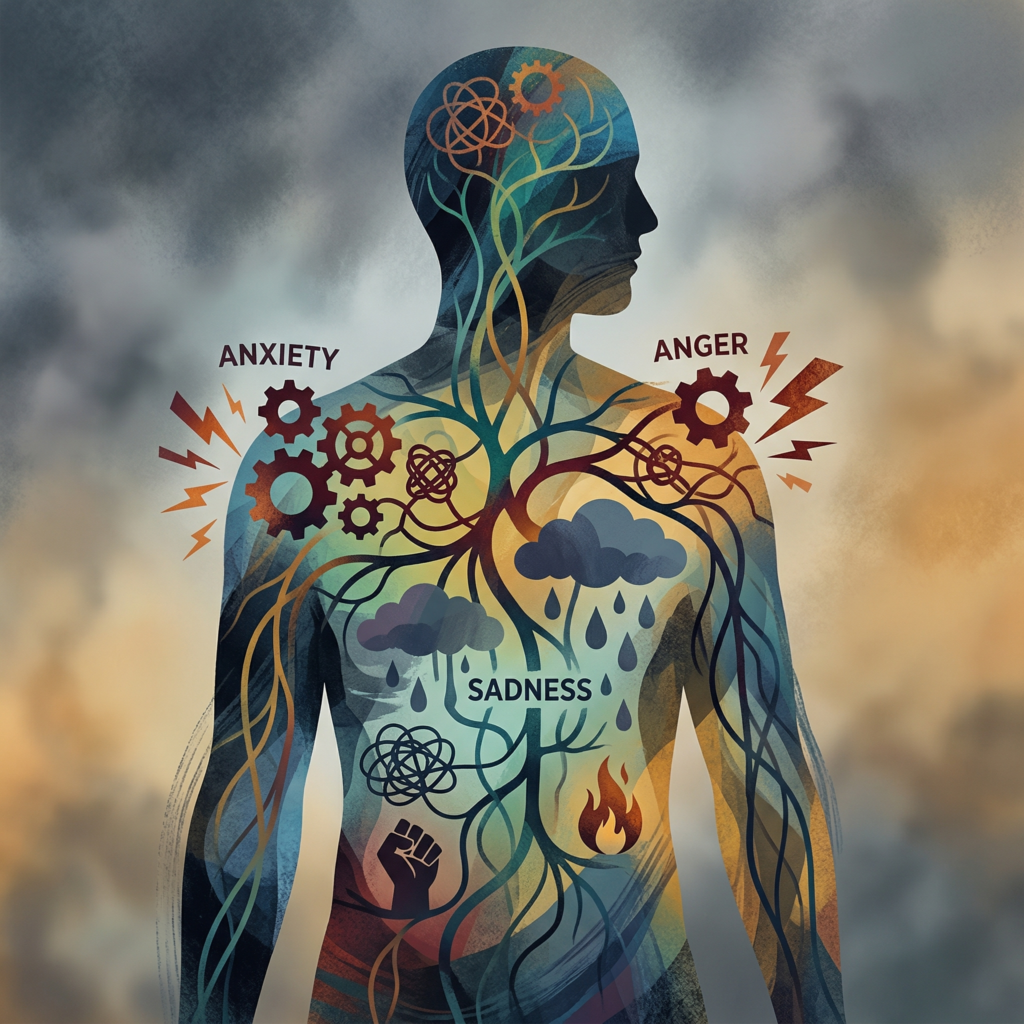
What Are Difficult Emotions?
Difficult emotions aren’t random disruptions.
They are signals your system is trying to process something important.
Anger often points to a boundary being crossed
Anxiety reflects uncertainty your system is trying to prepare for
Sadness signals loss, even subtle or unacknowledged
Shame emerges where your self-worth feels conditional
Jealousy reveals unmet needs or internal comparisons
The problem isn’t that these emotions exist.
The problem is that many high achievers learned early on that emotions interfere with performance.
Research in affective neuroscience shows emotions are physiological responses before they are cognitive interpretations. They move through the nervous system first.
When unmanaged, they become disruptive. When understood, they become information.
The Mindedjoy Shift: From Control → Connection
High achievers are trained to manage life through control.
But emotional stability doesn’t come from control.
It comes from capacity.
Capacity is your ability to:
Stay present when discomfort arises
Experience emotion without being overwhelmed
Respond instead of react
This requires a different skill:
Learning how to stay with yourself — instead of overriding yourself
How to Manage Difficult Emotions — The MindedJoy Regulation Framework
This is not about fixing emotions.
It’s about expanding your ability to move through them without losing yourself.
1. Notice — Return to the Body
Before you analyze, pause.
Ask:
What is happening in my body right now?
Look for:
Tightness
Restlessness
Heat
Shallow breathing
Awareness is what interrupts autopilot.
2. Name — Create Clarity
Vague emotions feel overwhelming.
Specific emotions feel workable.
Instead of:
“I feel bad”
Try:
“I feel anticipatory anxiety”
“I feel pressured and mentally fatigued”
Precise labeling helps your system settle.
3. Normalize — Remove Internal Resistance
Instead of:
“Why am I like this?”
Shift to:
“This makes sense given what I’m dealing with”
Normalization reduces:
Shame
Self-criticism
Internal conflict
And that alone lowers intensity.
4. Regulate — Stabilize the System
You don’t need complex techniques.
You need consistent micro-regulation:
Slow your breathing
Step away briefly
Move your body
Write to clear mental noise
Delay reactive decisions
Regulation is not avoidance.
It’s what allows you to respond with clarity.
5. Integrate — Turn Emotion into Insight
This is where most people stop too early.
Ask:
What pattern is repeating here?
What am I avoiding acknowledging?
Is a boundary being crossed?
Am I exhausted, misaligned, or over-extended?
Emotion is not the problem.
Unintegrated emotion is.
Managing Emotions at Work (Without Losing Credibility)
The workplace adds another layer:
Image.
You want to be seen as:
Capable
Composed
Reliable
But emotional suppression comes at a cost.
Instead of shutting down, try:
Pause before responding to triggering messages
Take short regulation breaks between high-pressure tasks
Set clear boundaries without over-explaining
Acknowledge pressure without oversharing
Emotional maturity doesn’t weaken your authority.
It stabilizes it.
Experts define emotional regulation as the process of managing how we feel and respond to emotional states, helping us adapt our reactions and maintain balance without being overwhelmed by them.
How to Break Through Difficult Emotions (Without Avoidance)
Suppression is effective in the short term.
It helps you:
Stay productive
Maintain composure
Meet expectations
But underneath…
It accumulates.
What you don’t process becomes:
Irritability
Burnout
Emotional detachment
Or sudden overwhelm that feels “out of nowhere”
Avoidance doesn’t remove emotion.
It delays it.
A More Honest Truth About Emotional Waves
You may have heard that emotions pass quickly.
What’s more accurate is this:
The initial emotional surge is brief.
But how you think about it determines how long it stays.
If you:
Replay it
Resist it
Judge it
You extend it.
If you:
Allow it
Regulate it
Understand it
You move through it.
When It Feels Like Too Much
If your emotions feel:
Persistent
Intensely distressing
Difficult to carry alone
That matters.
You don’t need to push through everything.
Support — whether through coaching, therapy, or structured guidance — can help you build capacity faster and more safely.
The Link Between Emotional Capacity and Sustainable Success
Most high performers optimize for output.
But long-term success is not built on output alone.
It’s built on capacity.
Capacity determines:
How much pressure you can hold
How quickly you recover
How clearly you think under stress
How stable you feel while succeeding
Emotional regulation isn’t separate from success.
It’s what makes success sustainable.
Frequently Asked Questions
Why do I feel emotionally off even when life is going well?
Because external success doesn’t automatically create internal stability. If your system is under constant pressure, it will signal that — even if everything looks fine on the outside.
Why do my emotions feel overwhelming sometimes?
Because your nervous system activates before your thinking mind catches up. Overwhelm often means your system is overloaded — not that you’re incapable.
Can I manage emotions without losing productivity?
Yes. In fact, small moments of regulation protect your performance. Suppression may help short-term, but it reduces clarity and consistency over time.
Will emotional regulation actually improve performance?
Yes — not as motivation, but as capacity.
More capacity → more stability
More stability → more consistency
More consistency → sustainable performance
Bringing It All Together
Managing difficult emotions isn’t about control.
It’s about relationship.
The relationship you have with:
Discomfort
Uncertainty
Internal pressure
When that relationship shifts…
You don’t become emotionless.
You become steady.
And from that place, everything changes.
Final Thought
The goal isn’t to control your emotions.
It’s to become someone who can stay with them — without losing yourself.
Some professionals eventually realize sustainable well-being also requires redesigning how they work, earn, and structure their energy. One approach I’ve personally explored is building more flexible, lower-pressure online income systems.
Affiliate disclosure: I’m an active Wealthy Affiliate member and may earn a commission if you purchase through links on this page. I only recommend products I use and believe provide value. No extra cost to you.
Quick verdict: Wealthy Affiliate is a beginner-friendly, all-in-one platform that bundles hosting, training, and keyword tools — excellent value for new and scaling affiliate marketers.
Health Disclaimer
This article provides general well-being information and is not a substitute for professional mental health care. If you are experiencing severe emotional distress or symptoms that impact your daily life, please seek support from a licensed mental health professional.
About the Author
Written by Nhlanhla Nene
Nhlanhla is a Wellbeing Coach, Mindvalley Certified Life Coach, and the founder of Mindedjoy. With advanced training in narrative, personal, and corporate coaching, and a rich career background as a Certified Global Management Accountant,(ACMA, CGMA) – he blends psychology-based coaching with real-world leadership insight. His mission is to help high-performing professionals bridge the achievement–fulfillment gap, strengthen resilience, and build lives filled with meaning, joy, and sustainable success.