
By Nhlanhla Nene – Well-being Coach & Founder of Mindedjoy
TL;DR: A Gentler way to work with Overthinking.
Overthinking isn’t a mindset flaw—it’s a nervous system habit formed through responsibility, pressure, and high performance. Rumination keeps the brain’s threat system activated, which is why “just stop thinking” doesn’t work. Lasting relief comes from safety-based regulation, not force. Science-backed tools like expressive writing, gentle movement, mindfulness, grounding resets (3-3-3), structured “worry windows,” and reduced stimulation help retrain the nervous system to soften. High achievers don’t need more control—they need consistent signals of safety. Calm is learned through repetition, not effort.
Many high-achieving professionals struggle with chronic overthinking despite appearing calm, capable, and highly functional externally. Even when life is relatively stable, the mind may continue replaying conversations, anticipating problems, or mentally scanning for risk. This article explores the psychology of overthinking, why high performers struggle to switch off mentally, and science-backed ways to calm an over-activated nervous system without relying on force or self-criticism.
For many high-achieving professionals, overthinking is the hidden cost of success.
You’re outwardly competent, inwardly alert. Productive during the day, mentally crowded at night.
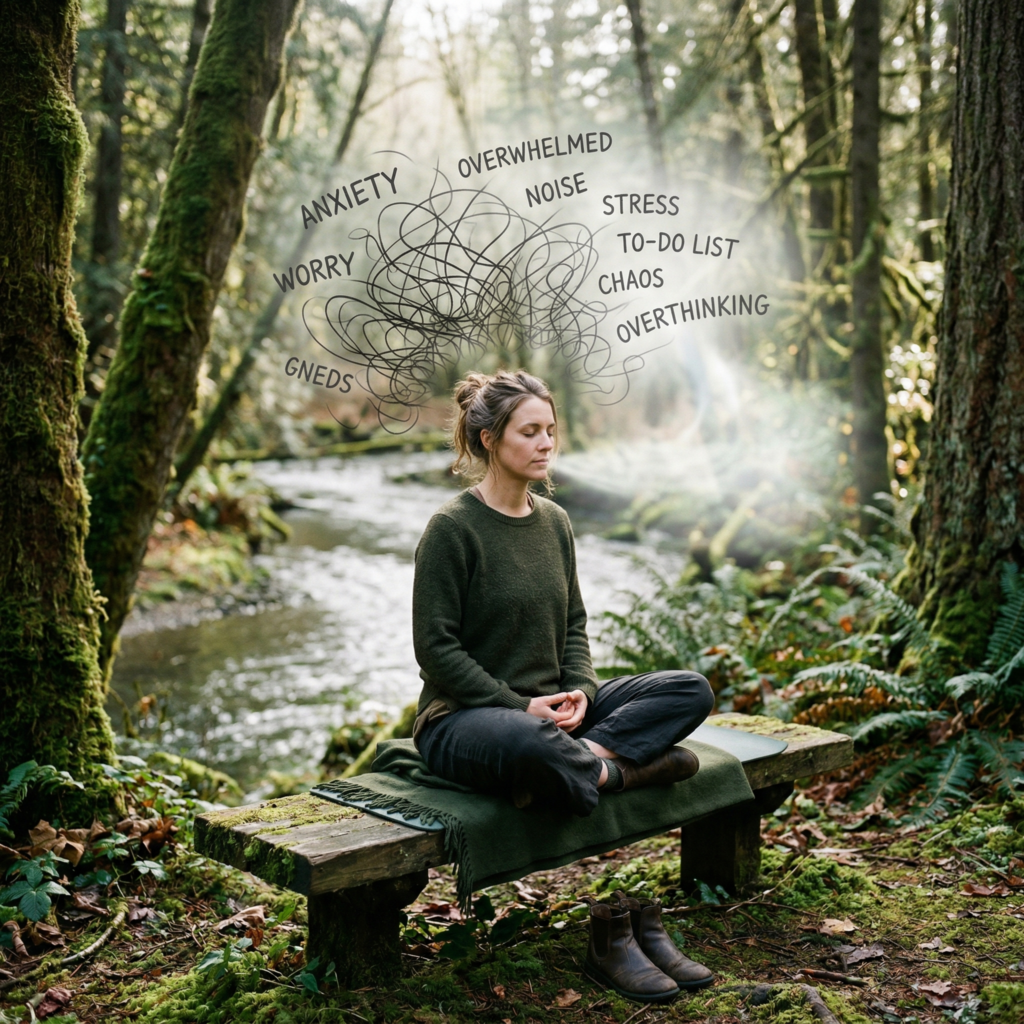
Why Overthinking Persists—Even When Life Is “Fine”
In my coaching work with high-performing professionals, overthinking is rarely caused by lack of capability. More often, it develops in people who became highly responsible early in life and learned to stay mentally prepared in order to feel safe, competent, or in control.
Overthinking (rumination) is often described as repetitive thinking.
But that’s incomplete.
It’s not just cognitive—it’s physiological.
Research shows that rumination keeps the brain’s threat system activated—raising stress hormones, disrupting sleep, and increasing emotional reactivity. In simple terms, the body stays braced, even when there’s no immediate danger.
For high achievers, this pattern forms through:
sustained responsibility
emotional control
performance pressure
being “the strong one”
Your mind learned:
Stay ahead = stay safe
So when things slow down:
Many high achievers experience mental acceleration the moment external stimulation decreases. When work slows down or the environment becomes quieter, unresolved cognitive tension becomes more noticeable—causing the mind to search for problems, replay scenarios, or anticipate future pressure.
Why “Just Stop Thinking” Never Works
Overthinking doesn’t respond to logic.
It responds to:
safety
When your system is activated:
advice doesn’t land
reasoning doesn’t stick
self-criticism makes it worse
Change happens through:
consistent signals that you’re safe
Not control.
Gentle, Science-Backed Ways to Work With Overthinking
1. Notice Without Correcting
Instead of asking, “Why am I like this?”, try recognizing that your nervous system may simply be activated.
Notice signs like a tight jaw, shallow breathing, tension, or urgency.
Awareness without self-judgment can reduce internal threat and help the body gradually return to regulation.
2. Externalize Thoughts Before They Multiply
Overthinking thrives in loops.
Writing breaks the loop.
5 minutes is enough.
Not to journal perfectly—
to offload.
3. Use Movement to Exit the Mental Arena
Overthinking keeps attention trapped in the mind, while movement helps reconnect you with the body.
Walking, stretching, or slow movement can regulate stress and tension —
not for fitness or performance, but for nervous system recovery and grounding.
4. Practice Mindfulness Without Trying to Be Calm
Mindfulness is often misunderstood as “clearing the mind.”
For high achievers, that expectation backfires.
Real mindfulness is simply staying with what’s happening, without trying to improve it.
If your mind gets louder when you slow down, you’re not failing—you’re noticing.
Start with neutral anchors:
the weight of your feet on the ground
the rhythm of your breath
ambient sounds
Each gentle return to the present is a signal of safety. That’s how regulation is learned.
5. Reduce Stimulation as an Act of Care, Not Control
Late-night scrolling, constant alerts, and caffeine don’t cause overthinking—but they amplify it.
Instead of framing this as restriction, think in terms of relief.
Ask:
“What helps my system unwind, not perform?”
Low-stimulation evenings aren’t about productivity.
They’re about giving your nervous system permission to stand down.
When Thoughts Spiral Quickly: Grounding That Actually Helps
The 3–3–3 Reset
Name:
3 things you see
3 things you hear
3 body movements
This shifts attention:
from threat → reality
The 5–5–5 Rule
Ask:
Will this matter in 5 minutes?
5 days?
5 years?
This expands perspective:
reducing urgency
Daily Micro-Shifts That Build Calm Over Time
Create a Contained Space for Worry
Set aside a short “worry window” each day.
When anxious thoughts appear outside it, gently note them for later.
This teaches the brain that worry doesn’t need to dominate every moment—without suppressing it.
Choose Completion Over Complexity
Overthinking feeds on ambiguity.
Small, tangible actions—making tea, organizing a single drawer, stepping outside—restore a sense of agency and grounding.
Support Isn’t a Failure of Self-Regulation
Guided meditation apps, coaching, or therapy aren’t crutches. They’re regulation partners.
When overthinking feels persistent, structured support helps your system learn new patterns faster—and with less self-blame.
Protect the Basics
Sleep, nutrition, and routine aren’t lifestyle upgrades. They’re nervous-system stabilizers.
When these foundations wobble, the mind compensates by staying alert.
The Structural Shift Most People Miss
Overthinking isn’t just about thinking.
It’s about constant mental responsibility.
If your life requires:
constant decision-making
constant responsiveness
constant anticipation
Then your mind:
never stands down
That’s why many high achievers begin building systems where:
their attention is protected
their output is structured
their income isn’t tied to constant mental effort
Not to do less—
but to think less all the time
A Sustainable Mental Capacity Framework
Think in cycles:
Input → Processing → Integration → Recovery
Most people optimize:
input
output
Very few protect:
integration
recovery
That’s where calm is rebuilt.
What This Looks Like in Real Life
At work: grounding before meetings creates clarity without urgency
In relationships: presence replaces over-analysis
In self-care: quieter evenings feel restorative instead of unproductive
Frequently Asked Questions
How can I stop overthinking scientifically?
Evidence-based approaches to reducing overthinking include mindfulness practices, expressive writing, grounding techniques, and cognitive reframing. These methods help regulate the nervous system and shift unhelpful thought patterns
What is the 3-3-3 rule for overthinking?
The 3-3-3 rule is a grounding technique where you name three things you can see, three things you can hear, and move three parts of your body. This helps bring attention back to the present moment and reduce mental overwhelm.
What is the 555 rule for anxiety?
The 5-5-5 rule is a perspective-shifting technique that encourages you to ask whether a current concern will matter in five minutes, five months, or five years. It helps reduce urgency and reframe anxious thinking.
How do I stop overthinking and feel calm?
Overthinking often continues because the nervous system is still in an alert state. Calming practices such as slow breathing, grounding, and reducing stimulation help signal safety to the body and support a return to calm.
A Quiet Reframe
If your mind won’t switch off:
You’re not broken.
You’re:
over-activated
Try:
reduce one input
create one pause
allow one moment of stillness
Let that be enough.
You don’t need more control.
You need more safety.
Final Reflection
For many professionals, lasting mental calm eventually requires more than coping techniques. It requires building a life structure where attention, recovery, and nervous system regulation are no longer constantly competing with pressure and over-stimulation. One approach I’ve personally explored is building more flexible, lower-pressure online income systems.
Affiliate disclosure: I’m an active Wealthy Affiliate memberand may earn a commission if you purchase through links on this page. I only recommend products I use and believe provide value. No extra cost to you.
Quick verdict: Wealthy Affiliate is a beginner-friendly, all-in-one platform that bundles hosting, training, and keyword tools — excellent value for new and scaling affiliate marketers.
About the Author
Nhlanhla Nene is a Well-being Coach, Mindvalley Certified Life Coach, and founder of Mindedjoy. With advanced training in narrative, personal, and corporate coaching—and a background as a Certified Global Management Accountant (ACMA, CGMA)—he helps high-performing professionals bridge the achievement–fulfillment gap and build lives rooted in clarity, resilience, and meaning.