
A More Honest Way to Rebuild Strength When You’re Already “High-Functioning”
Written By Nhlanhla Nene – Well-being Coach & Founder Of Mindedjoy
Introduction
You’re still showing up.
You’re still delivering.
From the outside, nothing looks broken.
TL;DR: Resilience Isn’t Your Problem…Depletion is. (In 20 seconds)
Resilience isn’t the problem for high-achievers — depletion is. Many high-functioning professionals mistake endurance for strength, pushing through stress while quietly disconnecting from themselves. Over time, this leads to emotional numbness, fatigue, and the achievement–fulfillment gap. True resilience isn’t about coping harder or performing competence; it’s about recovery without self-abandonment. Sustainable resilience restores connection, alignment, and self-trust — allowing you to relate differently to pressure, performance, and control. Real strength isn’t enduring more. It’s recovering in ways that protect your energy and identity.
And yet — something feels thinner than it used to.
Not dramatic.
Not a crisis.
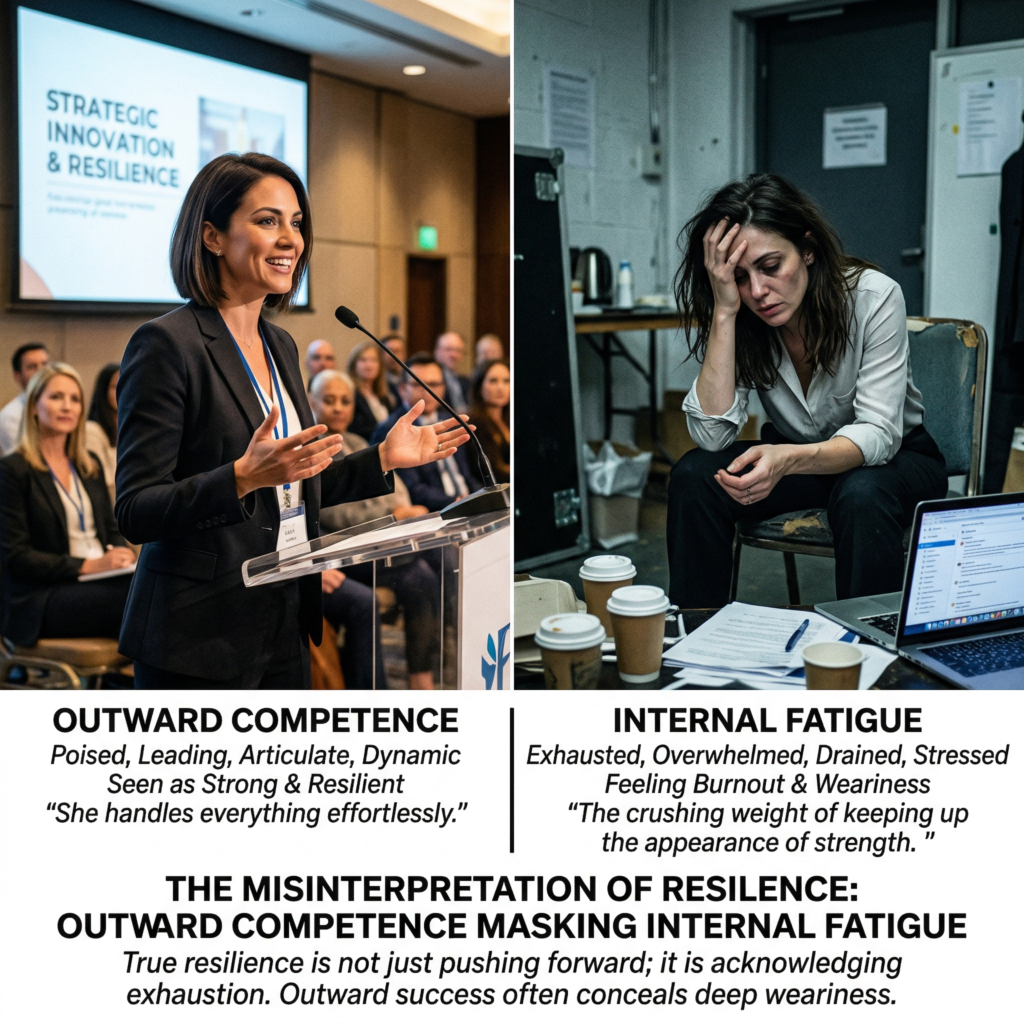
Just a quiet exhaustion that doesn’t resolve with rest, routines, or another mindset shift.
This is theachievement–fulfillment gap at work.
Resilience isn’t failing.
It’s being overused
If your life requires constant strength without recovery, depletion becomes inevitable.
Why Traditional Resilience Advice Stops Working for High Achievers
You already know how to cope.
You’ve learned to regulate, rationalize, and keep going.
What rarely gets addressed is the cost of doing so:
You become competent, but emotionally distant from yourself
You adapt, but slowly abandon your own needs
You succeed, but feel oddly disconnected from meaning
Resilience, when misunderstood, becomes endurance.
And endurance without renewal eventually becomes numbness.
True resilience isn’t about pushing harder.
It’s about relating differently to pressure, performance, and self-worth.
Psychological resilience research shows that recovery — not prolonged endurance — is what protects long-term mental health.
The Structural Problem Beneath Depletion
Most advice says:
“Build resilience”
But ignores:
the system draining you
If your life is built on:
over-responsibility
constant control
high internal pressure
Then resilience becomes:
survival
No mindset shift can fix a system that never allows recovery.
The MindedJoy Model of Sustainable Resilience
The 7 C’s — Reclaimed, Not Performed
These aren’t traits to achieve.
They’re capacities to restore.
1. Competence (Without Self-Worth on the Line)
You are already capable. The work here is learning when enough is enough.
Micro-shift: Practice finishing a task at “sufficient” instead of “exceptional” — and notice the discomfort without fixing it.
2. Confidence (Rooted in Being, Not Proving)
High achievers often trust their output more than themselves.
Micro-shift: Ask, “If I didn’t have to prove anything today, how would I show up?”
3. Connection (Beyond Functionality)
Support isn’t just about networking or problem-solving. It’s about being seen without performing competence.
Micro-shift: Share one unfinished thought or uncertainty with someone safe — without turning it into a solution.
4. Character (Aligned, Not Perfect)
Integrity isn’t doing more. It’s noticing where your life quietly contradicts your values.
Micro-shift: Identify one “yes” that’s eroding your energy — and explore what it’s protecting you from.
5. Contribution (Without Over-Responsibility)
Helping others can become a way to avoid tending to yourself.
Micro-shift: Before offering help, ask, “Is this generosity — or self-avoidance?”
6. Coping (That Leads to Healing, Not Suppression)
Calm is helpful — unless it silences what needs attention.
Micro-shift: When stress arises, ask, “What is this feeling asking me to acknowledge?”
7. Control (That Releases What Was Never Yours)
Resilience grows when you stop managing everything alone.
Micro-shift: Name one outcome you’re gripping — and practice loosening your timeline, not your standards.
The 5 C’s of Coping — Reframed for Emotional Maturity
Coping isn’t the goal.
Integration is.
Calm: Not to numb, but to create space for honesty
Clarity: Not urgency, but discernment
Connection: Not reassurance, but resonance
Communication: Not explanation, but self-respect
Confidence: Not certainty, but self-trust
If coping leaves you functional but disconnected, it’s time to go deeper.
What Sustainable Resilience Actually Looks Like
rest without guilt
progress without pressure
support before collapse
alignment over optimization
Resilience becomes quieter—but stronger
When Resilience Quietly Breaks Down
Common signs I see in high-functioning professionals:
You’re tired, but rest makes you anxious
You’re productive, but joy feels distant
You’re capable, but emotionally flat
You cope well — but feel alone in it
These aren’t failures.
They’re signals that your system has been adapting without replenishment.
A Better Definition of Resilience
Resilience is not:
enduring more
Resilience is:
recovering without abandoning yourself
A Better Way to Think About It
Think in this sequence:
Recovery → Capacity → Clarity → Performance
Most people try:
Pressure → Endurance → Collapse
That’s why it doesn’t last.
Frequently Asked Questions
Why do high achievers struggle with resilience?
Because resilience becomes endurance without recovery.
What’s the difference between coping and resilience?
Coping manages stress. Resilience restores connection.
How do I rebuild resilience?
Prioritize recovery, reduce pressure, and reconnect with yourself.
Final Reflection
You don’t need:
more strength
more discipline
more endurance
You need:
More recovery
More honesty
A system that supports your humanity
Some professionals eventually realize sustainable well-being also requires redesigning how they work, earn, and structure their energy. One approach I’ve personally explored is building more flexible, lower-pressure online income systems.
Affiliate disclosure: I’m an active Wealthy Affiliate member and may earn a commission if you purchase through links on this page. I only recommend products I use and believe provide value. No extra cost to you.
Quick verdict: Wealthy Affiliate is a beginner-friendly, all-in-one platform that bundles hosting, training, and keyword tools — excellent value for new and scaling affiliate marketers.
Author Bio
Written by Nhlanhla Nene
Nhlanhla is a Wellbeing Coach, Mindvalley Certified Life Coach, and the founder of Mindedjoy. With advanced training in narrative, personal, and corporate coaching, and a rich career background as a Certified Global Management Accountant,(ACMA, CGMA) he blends psychology-based coaching with real-world leadership insight. His mission is to help high-performing professionals bridge the achievement–fulfillment gap, strengthen resilience, and build lives filled with meaning, joy, and sustainable success.