
TL;DR: Loneliness in high achievers in 20 seconds
High achievers often experience hidden loneliness as success increases and emotional support decreases. Research shows strong social connections improve resilience, regulate stress, and protect long-term well-being. Chronic self-reliance leads to “unsupported load,” emotional suppression, and resilience fatigue. Sustainable success requires intentional relational depth—not just performance.
You can lead teams.
Close deals.
Build companies.
Carry families.
And still feel like no one really knows you.
Loneliness in high achievers is rarely dramatic. It doesn’t look like social withdrawal or visible breakdown. It looks like competence. Composure. Capability.
And beneath it — unsupported load.
In my work coaching high-performing professionals, I repeatedly see the same pattern:
As achievement rises, emotional transparency decreases.
As visibility expands, relational depth contracts.
As responsibility increases, support systems quietly thin out.
This is one of the core drivers of the Achievement–Fulfillment Gap.
And it is why social support and resilience are inseparable.
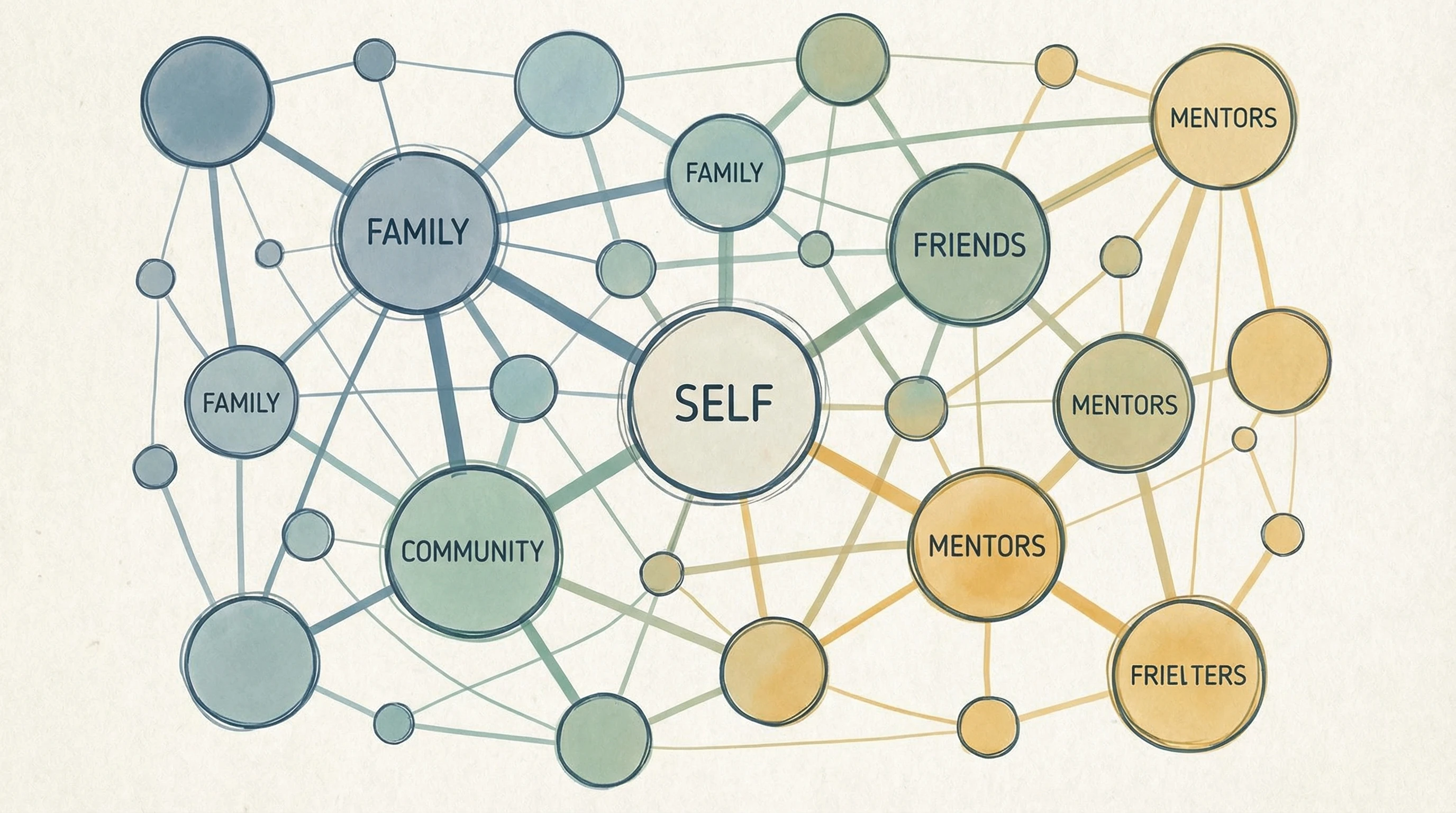
Why Loneliness in High Achievers Is Psychologically Dangerous
Loneliness is not merely an emotional state. It is a physiological stressor.
Research led by Julianne Holt-Lunstad (2010), analyzing data from over 300,000 participants, found that strong social relationships increase survival likelihood by 50% — an effect comparable to well-known health risk factors.
The American Psychological Association (APA) identifies supportive relationships as a central component of psychological resilience.
Harvard Medical School highlights social connection as one of the strongest predictors of long-term well-being.
The Centers for Disease Control and Prevention (CDC) recognizes social isolation as a serious public health concern associated with increased risk of anxiety, depression, and chronic disease.
This is not sentimentality.
Connection regulates cortisol.
Support reduces perceived threat.
Belonging stabilizes the nervous system.
Resilience is biologically relational.
Why High Achievers Drift Toward Isolation
High achievers do not isolate because they dislike relationships.
They isolate because strength becomes identity.
In coaching conversations, this pattern appears repeatedly:
They become the emotional container for everyone else
They stop sharing unfinished thoughts
They curate competence
They outgrow peer circles but never intentionally rebuild them
They equate vulnerability with reputational risk
Externally admired.
Internally unsupported.
The danger is not visible breakdown.
It is quiet erosion.
Pressure becomes identity.
Self-reliance becomes armor.
Isolation becomes normalized.
Over time, resilience fatigue sets in.
The High Achiever Isolation Framework™
Through years of working with high-performing professionals, a repeatable progression emerges.
Phase 1: Performance Consolidation
Achievement increases. Identity becomes competence-driven. Emotional restraint is rewarded.
Phase 2: Relational Narrowing
Peer group shifts. Vulnerability decreases. Social contact remains frequent but becomes surface-level.
Phase 3: Self-Reliance Hardening
Problems are solved internally. Help-seeking feels inefficient or unsafe. Emotional suppression increases.
Phase 4: Unsupported Load
Responsibilities accumulate without corresponding relational depth. Stress becomes chronic rather than acute.
Phase 5: Resilience Fatigue
Symptoms emerge:
Emotional numbness disguised as composure
Reduced life satisfaction despite measurable success
Burnout confusion (“Why am I tired? I’m winning.”)
Increased irritability or quiet withdrawal
Resilience rarely collapses functionally first.
It collapses relationally.
The 7 C’s of Resilience — Why Connection Is the Load-Bearing Beam
Pediatrician and resilience researcher Kenneth Ginsburg introduced the “7 C’s of Resilience”:
Competence
Confidence
Connection
Character
Contribution
Coping
Control
Connection is not just one factor among equals.
It is structural.
Without connection:
Confidence becomes fragile.
Coping narrows into suppression.
Control becomes rigidity.
Contribution becomes performance-driven.
High achievers rarely lack competence.
They often lack relational safety.
The Hidden Cost of Chronic Self-Reliance
Self-reliance builds careers.
Chronic self-reliance erodes well-being.
When support systems thin out, we observe:
Emotional suppression masked as composure
Performance-based identity
Diminished relational depth
Increased physiological stress
Reduced fulfillment despite success
The issue is not workload.
It is unsupported load.
Practical Strategies to Reduce Isolation Without Damaging Professional Credibility
High achievers do not need dramatic disclosure. They need structured relational reinforcement.
1. Conduct a Relational Audit
List the five people you speak to most.
Now identify which of them knows your current internal reality.
Frequency is not depth.
2. Increase Honesty by 10%
Choose one safe person. Share one unfinished thought this week. Not a solution — a reality.
3. Rebuild Peer-Level Community
If you have outgrown old circles, build new ones intentionally — mastermind groups, professional peer forums, leadership communities.
4. Normalize Incremental Vulnerability
Relational safety grows through consistency, not confession.
5. Separate Visibility From Intimacy
Audience size does not equal support strength.
Applause does not regulate your nervous system.
The wider your reach, the more intentional your private support must be.
Why Social Support and Resilience Are Inseparable
Resilience is not stoicism.
It is regulated adaptation under stress.
And regulation requires co-regulation.
The nervous system stabilizes through safe connection.
Support reduces perceived threat.
Belonging expands coping capacity.
High achievement without relational reinforcement eventually creates strain.
Sustainable success requires emotional infrastructure.
Frequently Asked Questions
Why do high achievers feel lonely?
High achievers often equate strength with self-sufficiency. As responsibilities increase, emotional transparency decreases. Over time, peer circles shift and vulnerability feels risky, leading to relational narrowing despite outward success.
Is loneliness common among leaders and executives?
Yes. Research on leadership stress shows that increased responsibility and visibility often reduce psychological safety. Leaders frequently become emotional containers for others while lacking equivalent support.
How does social support improve resilience?
Supportive relationships regulate stress physiology, reduce perceived threat, and improve emotional recovery. Strong social bonds are linked to lower mortality risk and improved long-term well-being.
Can high achievement cause isolation?
Achievement itself does not cause isolation. However, identity patterns built around competence, composure, and performance can reduce vulnerability and shrink emotional support networks.
What are signs of resilience fatigue?
Common signs include emotional numbness, increased irritability, unexplained exhaustion, reduced life satisfaction despite success, and reluctance to seek support.
Final Reflection
Loneliness in high achievers is rarely discussed because it contradicts the narrative of success.
But achievement without connection produces quiet erosion.
You do not need a larger network.
You need deeper anchors.
Resilience strengthens in increments of shared truth.
Not grand confessions.
Not dramatic disclosures.
Just consistent relational risk.
About the Author
Nhlanhla Nene is a Well-being Coach, Mindvalley Certified Life Coach, and founder of Mindedjoy. With advanced training in narrative, personal, and corporate coaching—and a background as a Certified Global Management Accountant—he helps high-performing professionals bridge the achievement–fulfillment gap and build lives rooted in clarity, resilience, and meaning.
Affiliate disclosure: I’m an active Wealthy Affiliate member and may earn a commission if you purchase through links on this page. I only recommend products I use and believe provide value. No extra cost to you.
Quick verdict: Wealthy Affiliate is a beginner-friendly, all-in-one platform that bundles hosting, training, and keyword tools — excellent value for new and scaling affiliate marketers.